Skip to Content

Should I buy now or wait for prices to fall?

should-I-buy-or-sell-sam-mcdadi-mississauga-real-estate-agentsEven though this article focuses on the Toronto condo market, the advice and information can be used for any real estate market including Victoria’s. I’m often asked this question if it’s the right time to sell or buy and it’s always a somewhat difficult one to answer as there are so many factors and individual circumstances to consider, and this article by Ricky Chadha provides some great advice and points to consider.

Question: I heard one of the bank economists online saying that there was only a four or five-month supply of new condos on the market in Toronto, but that buyers should wait a little longer to see if prices come down any further. It seems to me that prices are bound to bottom out soon. Do you think I should wait?

Markets do fluctuate and nobody knows when peaks or valleys will begin or end. The one thing that’s certain is that the Toronto market has continuously taken hits and bounced back over time.

But if you are in the market for a new condo, you have to ask yourself a simple question: “Why exactly am I buying?”

Whether you’re looking to buy a place you plan on living in for a number of years, or to rent out as an investment property, the market will likely fluctuate up and down throughout the time you own it. You can’t control that, and there are no guarantees, but over time you should realize value.

Sure, the market may bottom out in a month or six. You will still have likely gained some equity, and you can expect to see significant growth in the long term based on past trends.

Look at all the major financial market indices. The Dow Jones and S&P 500 have taken major hits in bad markets, yet people who held their positions are better off than they were before markets crashed, corrected, declined or whatever you want to call it. But that underlines there are many options for where you put your money – real estate, the markets, precious metals, under your bed…

It all boils down to opportunity cost – the cost of NOT making the investment in real estate or another asset. That is something I cannot answer for you; your choice as to the best place to put your money for growth requires some soul-searching on your part. It’s not surprising that I would encourage investment in real estate, but I find an asset you or a tenant can live in beats one that’s on paper. Everyone needs a roof!

Let’s get down to brass tacks and look at some numbers relating to the Toronto market.

In Toronto, resale condo units were down 16.9% in the first quarter of 2013 versus the same period last year. Prices were relatively flat year-over-year (0.5% decrease), with the average condo price hovering around the $333,000 mark in Q1 2013 (Source: TREB Condo Market Report Q1 2013).

New condominium completions were in a steady decline for the majority of 2012. However, in 2013 they’ve resumed an upward trajectory. Canadian Housing and Mortgage Corporation (CMHC) is estimating approximately 17,000 new condo units in 2013, compared with 11,000 last year. That’s a lot of condos coming on stream, but many are destined to be bought by investors and enter the rental market where, according to a report this week by Toronto-based condo research firm Urbanation, average rents have hit a record $1,856 a month.

So, active listings will likely remain high compared to previous years. No one can predict what that will mean for prices, but you will have a broad choice and can expect some competition in cost and the ability to negotiate.

Everything still boils down to that basic question: “Why am I buying?”

If you are moving for personal reasons such as quality of life improvement, you may not want to wait. If you are an investor looking to acquire a rental property, then urgency may not be a factor – there is clearly choice and opportunity. That said, waiting would also be a delay in your opportunity for monthly rental cash flow and a start to building equity with your newly acquired asset.

As always, the marketplace is never the over-riding factor – your choice must be based on what works for your own housing and financial needs.

Ricky Chadha is a broker with Royal LePage Estate Realty in Toronto, and specializes in applying social media and other digital tools to the business of real estate. You can find Ricky on Twitter @your416 or at his website RickyChadha.com.
Housing Market Conditions Improve on the South Coast

bcrea mayThe British Columbia Real Estate Association (BCREA) reports that a total of 6,904 residential sales were recorded by the Multiple Listing Service® (MLS®) in BC during April, up 1.9 per cent from March on a seasonally adjusted basis, but down 2.2 per cent compared to April 2012. Total sales dollar volume declined 3 per cent to $3.65 billion. The average MLS® residential price in the province was $528,507, down 0.8 per cent from a year ago.

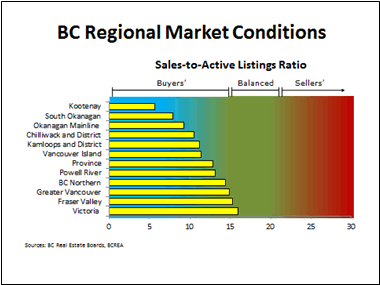
“BC home sales trended higher again in April, with seasonally adjusted unit sales now 8 per cent higher since the beginning of the year,” said Cameron Muir, BCREA Chief Economist. “Market conditions were at or near balanced conditions in Victoria, Vancouver, the Fraser Valley and the North last month, leading to a firming up of home prices.” The MLS® Home Price Index edged up 0.7 per cent over the past month in the Lower Mainland, and 1.5 per cent over the past three months.

Year-to-date, BC residential sales dollar volume was down 16.6 per cent to $10.8 billion, compared to the same period last year. Residential unit sales dipped 13.9 per cent to 20,476 units, while the average MLS® residential price was down 3.1 per cent at $529,785.

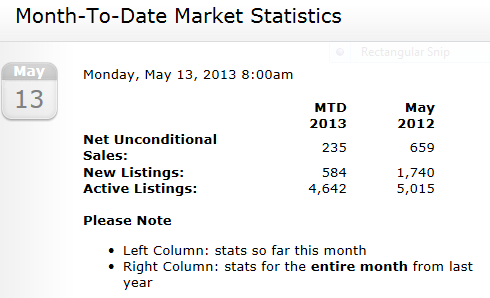
Here are the updated Month-to-Date statistics from the Victoria Real Estate Board as of Monday, May 13, 2013.Capture

History of Cole Island – West Coast Living at 210 Nia Lane

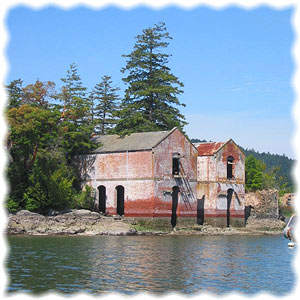
Better known by visiting boaters than by most Victorians, the picturesque little island at the head of Esquimalt Harbour has a unique history and even more encouraging future. Cole Island is in direct view from the south facing windows and decks of the waterfront home located at 210 Nia Lane in the quality enclave of custom designed homes in Gibraltar Bay, in the Town of View Royal, in Victoria, BC. Launch your kayak or boat from the neighbourhood dock at the head of Gibraltar Bay and explore the history and nature of this unique Island right in your own backyard! This is true west coast living at its finest. Take a Virtual Tour of 201 Nia Lane!

cole-island-005

The Royal Navy played a large role in the life of Colonial Vancouver Island, both for charting coastal waters and protection against enemies (Russia and the United States at different times) and for its influence on the social life in the Colony. Its Pacific Base was moved from Valparaiso, Chile, to Esquimalt in 1865. Six years earlier the little island, 400 feet long by 200 feet wide, at the western end of Esquimalt Harbour had been chosen as the site of the naval ammunition depot.

Cole Island was named after Edmund Picoti Cole, master of HMS Fisgard when Admiralty surveys were conducted in 1846. Orders for the construction of the first two powder magazines were given by Colonel Richard Clement Moody of the Royal Engineers and Admiral Sir Robert Baynes in 1859. The original 30’ by 50’ guardhouse was completed later that year.

More buildings were planned in 1862. Tenders were invited for “chopping, burning off and thoroughly cleaning all the trees, underbrush and etc., on Cole Island, at the head of Esquimalt Harbour.” Trees were to be cut “at chopping height” and underbrush cut to the ground. No trees or brush would be allowed to fall into the water, and the shoreline “is to be carefully cleared of all timber and logs to low water mark, and the work was to be completed within 14 days of acceptance.”

That was the year the Admiralty thought it prudent to secure ownership of the rocky islet. The Hudson’s Bay Company was requested to place Cole Island at Colonel Moody’s disposal “to preserve the island from sale or pre-emption.” Polite letters passed between the colonial secretary, the surveyor general for the colony and Colonel Moody. “I have the honor,” wrote the colonial surveyor, “to report to you, that I have received His Excellency’s instructions … to hand over the Island to you officially, which order you will be pleased to consider carried into effect from and after the 10th of March, 1862.”

At the height of its importance, from the first visit of the magnificent Flying Squadron in 1871 to the departure of the British fleet in 1905, it has had as many as 16 solidly constructed buildings connected by wooden walkways for safe storage and transport of powder and ammunition. It was transferred to the Canadian Navy on November 9, 1910, and was replaced before World War II by large concrete magazines at a safer location on the south shore of the Harbour.

A few of the old buildings were used for ships’ stores and some army field artillery as late as 1944.

cole-island-aerial-view-lg

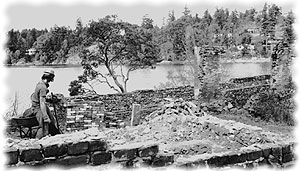
Now Cole Island has lost most of its unique heritage buildings, the only examples of their kind in western Canada. Lack of interest in Ottawa and bureaucratic buck-passing between provincial and federal governments have combined to allow destruction or dismantling of most of the buildings.

It could have been worse. The original directive to “preserve the island from sale or pre-emption” was forgotten in 1958 when the island was declared surplus and handed over to Crown Assets for disposal. This misguided attempt to sell part of Canada’s naval heritage did not sit well, even in Ottawa. A memorandum fro naval historian E.C. Russel recommended that the federal Department of Northern Affairs and Natural Resources consider Cole Island a national historic site.

“It is doubtful if any of the [surviving] buildings in the dockyard proper go back as far as some of the buildings of Cole Island … It will be noted that the Cole Island buildings date from as early as 1859 and all of these pre-date the formal establishment of Esquimalt Naval Base … by Imperial Order in Council dated 19 June 1865.”

The island was taken off the market. But not before some View Royal residents put in bids ranging from $1 to $5000, all promising loving care and attention. Other hopeful purchasers just wanted knock down the buildings and sell the old bricks.

cole-island-ruins

Then the Historic Sites and Monuments Board came into the picture, Jack Rippengale, superintendent of Fort Rodd Hill in 1962, explained how the bungling came about. The army establishment at Fort Rodd and Fisgard lighthouse were declared national historic sites, but as Cole Island was a naval establishment and not historically related to Fort Rodd Hill, which had its own magazine, it was left out of the equation.

“The question should have been whether or not the Island and its buildings were of historic significance in their own right. Parks Canada, by then the caretaker of Fort Rodd Hill, didn’t consider this, so the Island became a poor relative, and that’s a shame.”

Several buildings were considered unsafe so Parks Canada, fearful of lawsuits in case of accidents, took them down instead of repairing them. A team of articles spent several months making detailed records and drawings of the buildings as they were then, so some sort of reconstruction might still be possible. Thousands of bricks from the dismantled buildings were cleaned and stored, but vandals have since visited the abandoned site to collect bricks – and inflict more damage.

Lloyd Brooks, former deputy minister of the BC parks ministry, adds: “The excuse given that Fort Rodd Hill was basically an armoury, and that the naval magazine was incompatible with the Army establishment, was feeble. The finger points at members of the Historic Sites and Monuments Board, all but one Easterners, who called the shots. They decreed that the buildings, a mere 100 years old, did not warrant historic preservation.”


cole-island-008The Island then came under the protection of British Columbia Heritage Properties as an undeveloped historic site. The Branch did what it could to protect the island’s unique naval heritage, but looters, vandals and thieves are still thoughtlessly carrying on the destruction.

The latest attempt to save the few remaining buildings has come from a citizen’s group who have formed the Friends of Cole Island Society. The Society is approaching municipal, provincial and federal governments to explore ways of protecting the historic Island.

Visit the Friends of Cole Island Society website.

Study: Online real estate listings all about the first (superficial) impression

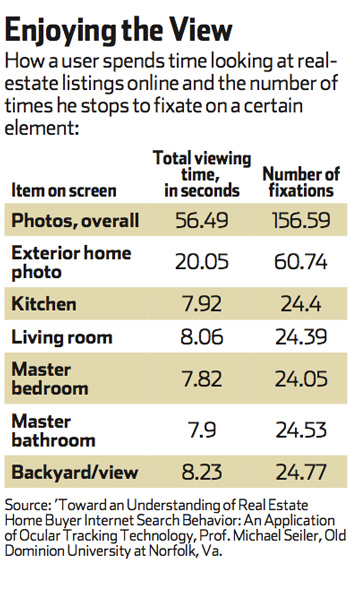
online-real-estate-listings-first-impressions-1024x768 Ninety-five per cent of people looking at home listings online view the first photo — usually an exterior shot — for 20 seconds. After that, it’s cursory glances at the other material, according to research from the Institute for Behavioral and Experimental Real Estate at Old Dominion University in Norfolk, Virginia.

“Without an eye-catching photo, the battle is lost before it begins,” Professional Michael Seiler told the Wall Street Journal. “You have to grab people’s attention within two seconds. Do it the way a billboard does.”

To conduct the study, Seiler and his team tracked the eye movements of 45 people who each viewed 10 listings with six photos, looking at the time spent viewing each online feature and the number of times their eyes stopped at a certain element.

Study highlights courtesy the Wall Street Journal:

  • Following the home exterior image, 76% of people viewed the property description second
  • Only 41.5% of participants even bothered to read real estate agents’ remarks, which the Journal notes “can be a turnoff if they contain all-capital text, hyped-up adjectives and brand names”
  • Overall, online homebuyers spend about 60% of their time on photos, 20% on the property description and 20% on the real-estate agents’ remarks section

blogChart via the Wall Street Journal. The study also found that as browsers click through listings, their interest wanes.

“People have respondent fatigue. After a while, you get lost in a sea of homes,” Seiler told the Journal.

It’s research that real estate agents and builders would do well to consider, especially in light of another study that found 90 per cent of homebuyers are searching for new homes online.

The study, entitled “Toward an Understanding of Real Estate Home Buyer Internet Search Behavior: An Application of Ocular Tracking Technology,” can be seen in its entirety here.

Article Information by www.BuzzBuzzHome.com

Greater Victoria Residential Real Estate Transitions to a Balanced Market

VICTORIA BC – Weighing in on the best April since 2010, Shelley Mann, President of the Victoria Real Estate Board, is cautiously optimistic that the Greater Victoria is back into a balanced market.

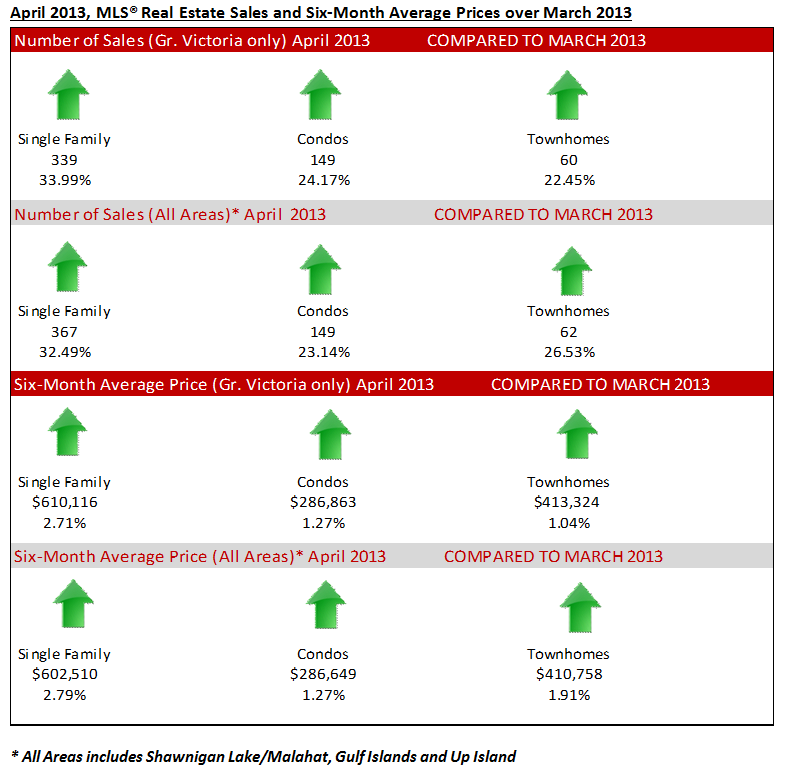
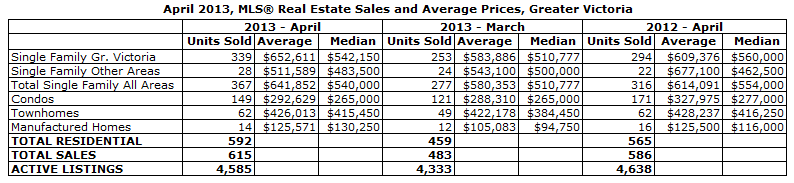
graphicalsummary“Consumer confidence is increasing,” Mann says. “Our total number of sales for April is 615, a 5% increase compared to April 2012 with 586 sales. On the residential side, more properties are selling, and slightly fewer are entering the market, so we are moving from a buyers’ market to more balanced market conditions.”

Mann’s cautions that one month doesn’t indicate a market trend, but is encouraged by increased showings by REALTORS®, the number of sales, and comments from other REALTORS® about multiple offers on properties.

Prices remained relatively flat, as predicted by Cameron Muir, Chief Economist of the BC Real Estate Association. There were 367 single family homes sold in April at a median price of $540,000, a 16% increase of homes sold over April 2012. Condominium sales were 149 at a median price of $265,000 and with 62 townhomes sold at a median price of $415,450. There are 4,585 active listings.

Total Waterfront Single Family Dwellings sold: 15, up 2 over April 2012 Total Non-waterfront Single Family Dwellings sold: 352, up 36 over April 2012 Single Family Dwellings sold over $1 million: 30 (5 over $2 million)

statisticalsummary

Summary Report and Graphs

Monthly Sales Summary Average Selling Price Graphs Active Listings, New Listings and Sales Graphs

Notes for Interpreting Our Statistics

  • To ensure sales are not over-reported, we report net sales: that is, the number of sales less the number of collapsed sales, if any.
  • Average Price is the total dollar volume of sales for the period divided by the number of sales in the period.
  • Six Month Average is the total dollar volume of sales for the last six months divided by the total number of sales in the last six months.
  • Median Price is the middle price in the list of sale prices when sorted from lowest to highest. There are an equal number of prices both above and below the median. Where there are an even number of prices in the sorted list, we calculate the median price as the average of the two middle prices.
  • The use of sale price statistics can be useful in establishing trends when applied over a period of time, i.e. six months or longer. The Victoria Real Estate Board cautions, however, that such information does not indicate the actual value of any particular property. Those requiring specific information on property values should contact a REALTOR®.


WINE TOURING ON THE SAANICH PENINSULA

When you have had enough of the quaint charm of Victoria, it is time to take a break in wine country.Peninsula Bike/Wine Tour

Yes, wine country. The Saanich Peninsula currently has eight producers – include a very good maker of gin and an excellent cider house – that operate tasting rooms. Some are open weekends only and others are open all week from May to October.

These producers are within half an hour of downtown Victoria. Those who prefer not to drive can easily book tours with one of several tour companies.

During the recent Taste festival in Victoria, a food and wine festival dedicated to British Columbia wines, Tourism Victoria hosted a small Saanich Peninsula tour to illustrate the variety of tour options that are available. Only three producers were included on this leisurely tour. It would have been no trick, moving at a faster pace, to visit six, but Victoria and fast pace don’t seem to go together. That’s part of Victoria’s charm.

The first stop was Sea Cider Farm & Ciderhouse. Now in its fifth year, Sea Cider sells its ciders in private wine stores all over British Columbia and has recently broken into markets in Washington and Oregon.

The idea of making European-style ciders came to owner Kristen Jordan, who was born in Medicine Hat, when she was studying at a college in Wales in 1985. The pubs all had local ciders on tap and she developed a palate for them. She already had a strong interest in apples from a family-owned orchard in the Shuswap.

After immersing herself in a career as an international consultant on food security issues, she bought a former sheep farm on the SaanichPeninsula with a view eastward to the Haro Strait. Here, she planted about 50 varieties of apples on four hectares (10 acres). All 1,200 trees are on dwarf rootstock. It gives the orchard a rather stunted appearance but it also means that the pickers don’t need ladders to gather the fruit.

The cidery, which was built in 2006, has a spacious rustic tasting room – a design probably inspired by those Welsh pubs. And in the spirit of a good publican’s ploughman’s lunch, Sea Cider also offers simple but delicious food to go with the ciders.

We have grown up in British Columbia with apple ciders that are refreshment beverages. Ciders in the European style, while tasty on their own, have flavours and textures that, much the same as wine, pair well with food. At Sea Cider, most are dry or only slightly off-dry sparkling ciders, with moderate alcohols of 6 to 8 percent.

Flagship ($15) is crisp, light and refreshing, with a green apple tang on the dry finish. Kings & Spies ($15) is crisply dry, with a refreshing finish and with good body. It is named for two heritage apple varieties but it is likely to have many more in the mix because Sea Cider buys apples through a social program for local food security, in which pickers harvest the fruit of Victoria area hobby farms.

Rumrunner ($17) has always been one of Sea Cider’s most interesting products, a full-bodied, generously flavoured cider with 12% alcohol. Production includes aging the cider in barrels which are first saturated with a Newfoundland rum called Screech. The result is a cider tasting like baked cinnamon apples, but not as sweet.

In total, there are usually eight or nine ciders on offer here, including Pomona ($25 for a 375 ml bottle), a dessert style product made from crabapples and modelled after Icewine.

The second and third stops on the day were on Old West Saanich Road, a narrow and winding road that – in the classic Victoria pace – cannot be taken too fast. There are actually four producers on this country thoroughfare. Starling Lane Winery is by any measure one of the best wineries on Vancouver Island. Because production is small, the wine shop generally opens on weekends only.

Nearby is Dragonfly Hill Winery, another tiny producer open on weekends or by appointment.

The two we visited are across the road from each other. Victoria Spirits also opens its tasting room and retail store on weekends. If one of the distillers is on hand, they will throw in a small tour to see the German-made still, a work of art as stills sometimes can be.

This producer opened in 2004 as a winery called Winchester Cellars. It was then owned by Ken Winchester, who trained as a distiller inScotland and began making Victoria Gin. Winemaking stopped when he left but the new owner, Victoria doctor Bryan Murray, continued making spirits. Peter Hunt (right), his stepson, harnessed his science degrees to take over as master distiller.

Selling for $50 a bottle, Victoria Gin definitely ranks among the world’s fine premium gins. It is a complex product with 10 botanicals flavouring the blend. As good as this gin is when taken straight, I would suggest taking a bottle of tonic water with you to the tasting room.

Victoria Spirits makes about 1,200 bottles of gin each month, along with a barrel-aged product called Oaken Gin and another spirit called left coast hemp vodka. As well, Peter is working on making a malt whisky.

De Vine Vineyards, on the other side of Old West Saanich Road, occupies a hill top with a dramatic vista over the Strait of Georgia with Mt. Baker on the horizon on a clear day. This view is one reason why the winery, open Thursday through Sunday and by appointment, has added a large patio in front of the wine shop. Here, you can sit with a glass of wine and take in that stunning view.

The winery is a family operation opened two years ago by John and Catherine Windsor. The owner of a real estate portfolio, he bought this Saanich property several years ago as a second home. The Windsors planted vines (Pinot Noir, Pinot Gris and Grüner Veltliner) to enhance the beauty of the east-facing slopes on the property. The original idea was to sell the grapes to Winchester Cellars. When their neighbour decided against making wine, they retained Ken Winchester as a consultant to launch their own winery. He mentored their daughter-in-law, Natalie, who has now become a very capable winemaker.

De Vine opened its tasting room last year with wines made with Okanagan fruit, in part because the organically-grown vines here are young and in part because it gives the winery more options. Judging from the taste of the wines, de Vine has found vineyards in the Okanagan that grow excellent fruit.

Roussanne 2011 ($20) and VRM 2011 – Viognier, Roussanne, Marsanne – ($21) are two 90 point white wines made with Okanagan grapes. Both show rich fruit flavours and aromas, with the Roussanne showing added complexity from having spent a little time in new French oak. Gamay Noir Rosé 2011 ($18) is peppery with cherry flavours and with a dry finish. 89. The winery currently offers a quaffable, full-bodied red, Dornfelder 2011 (88 points), from a grape rarely seen on its own because it often is used to darken the colour of red wines.

From its own vineyard, de Vine has released Pinot Gris 2011 ($15), a light but crisp white with aromas of citrus and with tangy citrus flavours, making it a refreshing wine. 88.

Natalie also makes a fortified dessert wine that changes its constituent fruit every year. Epiphany 2011 ($19) is made with Dornfelder and black currants, giving it a good dark hue and a lovely cassis aroma. The port-style wine is deliberately made not to be overly sweet. 88.

Future releases will include Merlot, Syrah and Pinot Noir, all from Okanagan fruit. This tasting room merits several visits through the season.

My Photo
North Vancouver, British Columbia, Canada

John Schreiner is Canada’s most prolific writer of books on wine. Since his first book in 1984, The World of Canadian Wine, he has written 15, including multiple editions of The Wineries of British Columba, British Columbia Wine Country and John Schreiner’s Okanagan Wine Tour Guide.

OPEN HOUSE MASTERS WEEKEND – BOTH AT GOLFING COMMUNITIES!

MASTERS LOGO

Join Me for an entire Open House weekend at two of my amazing listings located in golfing communities at Bear Mountain and Sayward Hill near Cordova Bay Golf Course. Take a break from watching The Masters and come and explore how your new home could be just steps away from world-class golf!


SATURDAY APRIL 13, 2013 2-4 PM

$599,900

Located in desirable Players Drive, outstanding quality in 20102168 Players Drive – Bear Mountain  4 Bed / 3 Bath  2121 Finished SqFt  ML#: 318474
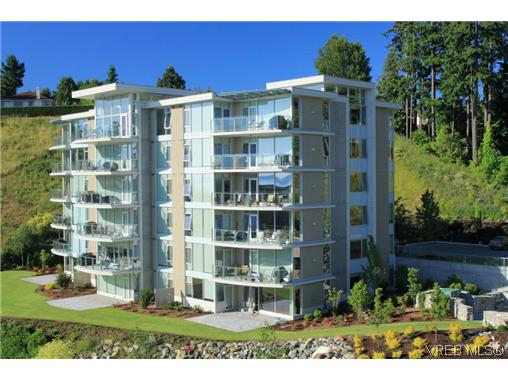

PRICE REDUCED! Quality & attention to detail are KEY to this 2010 Arts & Crafts custom built family home along desirable Players Drive. Like NEW with exquisite details & finishes incl. Tennessee Hickory floors, Brazilian granite, wainscoting & custom built-ins. Excellent layout: 4 Beds & Laundry up, his/hers Walk-In Closets, luxurious Ensuite w/ claw foot tub, entertainment-sized Great Room & Gourmet Kitchen fit for a FOODIE! Large lot provides spacious rear yard, great for entertaining & backs onto protected green space to ensure your PRIVACY. Start the New Year with a new home & RESORT LIFESTYLE found only at Bear Mountain with golf, spa, fitness club, dining, shops hiking/biking trails only minutes away!

http://www.ingridjarisz.com/feature-properties/listing-details/318474


SUNDAY APRIL 14, 2013 2-4 PM

$829,000

738 sayward303 – 738 Sayward Hill Terrace – Cordova Bay  2 Bed / 2 Bath  1861 Finished SqFt ML#: 318872

You Can Have It All at Sayward Hill! Stunning corner suite with rare SE exposure capturing light & views from floor-to-ceiling windows in 1,860 sqft of luxury. Pride of original ownership reflects quality & style in Jawl Dev. built condo. Chef’s dream gourmet kitchen: K/Aid s/steel appliances inc. gas cooktop, 11′ granite eating bar, loads of cabinets. Open floor plan perfect for entertaining, large deck w/ BBQ, wired media room, home office, spacious master bed retreat & spa-styled ensuite. Amenities you’re looking for close to home. A westcoast lifestyle in natural community setting of Cordova Bay, ocean views, sandy beaches, golf & market shops all at your front door, yet only 20 mins to Downtown or Airport.

http://www.ingridjarisz.com/feature-properties/listing-details/318872

wide_header

5 Mobile Apps to Make Homebuying Easier

Zoocasa Real Estate Search Zoocasa Real Estate SearchZoocasa iPhone App
Searching for real estate in Canada just got easier! Take advantage of Zoocasa’s powerful search technology to save time and energy to search homes for sale nearby. With one touch you will be able to see all properties for sale around your location displayed on a Google map. Narrowing your search is fast and easy by filtering on Price, Beds and Baths. View details including a photo and agent contact information. Include family and friends in the fun by emailing them the details with one tap!
Features
• Find homes for sale near you by using iPhone’s built in GPS
• Touch quick link to see a description, photo of the home and agent information
• Get directions to the home you’re viewing from where you are
• Customize your search by filtering for price, beds and baths
• Email the details to friends, family or agent
 

Realtor.ca iPhone App

REALTOR.ca - The Canadian Real Estate AssociationRealtor.ca iPhone AppREALTOR.ca is a free app offered by The Canadian Real Estate Association. It allows users to search for homes and property across Canada and to connect with REALTORS for more detailed information. The app will even connect you with a REALTOR to view, buy or sell a property.

REALTOR.ca is the most visited real estate website in Canada. The app will provide consumers with the same functionality and detail they get from REALTOR.ca while taking advantage of iPhone device features such as GPS and being able to add open house details to the calendar on the device .

Verico Mobile Mortgage Calculators

iPhone Mortgage CalculatorsThe most sophisticated and accurate Canadian mortgage calculators available. This tool gives you advanced insight into how much mortgage you may qualify for, what your payments may be, what share of your expenses your mortgage will take up and how much income would be required to afford your dream home.

Features:
• Mortgage Payment Calculator
• Purchase Financing Calculator
• Income Qualifier Calculator
• The latest interest rates
• Amortization tables
• Expense and payment charts

The Essential Real Estate Dictionary The Essential Real Estate Dictionary - Sourcebooks, Inc.

Esential Real Estate DictionaryThe Essential Real Estate Dictionary app is an up-to-date, authoritative reference, containing over 3,300 entries and phrases explaining the most commonly used real estate terms in clear, concise, easy-to-understand language.

Features:
• Over 3,300 terms, entire 400 page text found in The Essential Real Estate Dictionary.
• Includes real estate related images which accompany select terms.
• Fully searchable including letter-by-letter, real-time progressive search.
• Search by word, abbreviation and meaning.
• Clear and concise index interface.
• Save favorite terms for quick reference.
• Learn new words quickly with “Show Me Random Word” feature.
• No internet connection is required to run app.
• Both iPhone and iPod Touch compatible.

MoveTools State Farm MoveTools™ - State Farm Mutual Automobile Insurance Company

MovetoolsUse MoveTools to plan your tasks, pack and organize your stuff, and manage your entire move from start to finish. Say good-bye to the multiple to-do lists or the moving binder, and to sitting in a room full of half-packed boxes with packing labels stuck to your jeans. MoveTools gives you a fresh approach to planning a move: all the resources you need, in one place. And you can customize its features to create the moving experience that’s right for you.
Features:
• A week-by-week checklist of 34 moving tasks. Enter your move date, and add specific tasks to make a personalized to-do list.
• An interactive packing screen. Go room-by-room in your house, and virtually pack and organize all your stuff.
• Smart labels with unique QR codes. Label your boxes, and use a smart phone to read the labels and reveal the contents of any box without opening it.
• An inventory of all your possessions and the boxes in which they’re located. Search your inventory to find any item. And make notes about items, including value, as you go.
• Interactive articles and graphics help you deal with many of the challenges of moving.


Market Activity Follows Traditional Real Estate Cycle in Greater Victoria

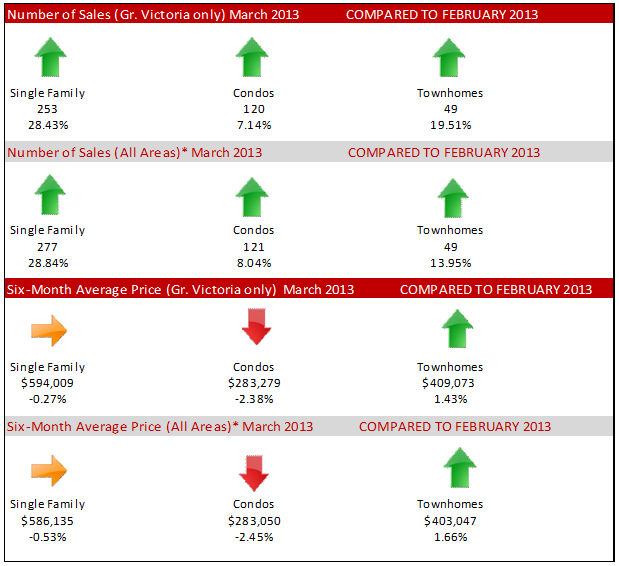
graphicalsummaryGreater Victoria’s real estate market is following tradition with a spring upswing in activities with month-over-month increases in showings, new listings and total sales.

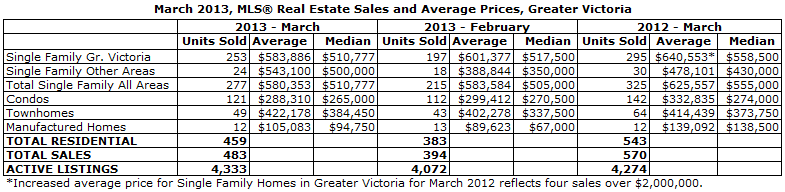
The Victoria Real Estate Board reports a total of 483 sales processed through the Multiple Listing Service (MLS®) in March 2013, an increase of 23% over the previous month. Sales figures are 15% lower than March 2012’s 570 sales.

“The market continues to unfold as predicted,” says Shelley Mann, President of the Board. “March resulted in the highest number of sales since July 2012 when the lending rules changed. With sales below the historical norm, there is potential pent-up consumer demand developing in the market. We expect quarterly activity to increase over the next two quarters.

“The real estate market peaked in 2008, and then the market adjusted during the global economic crisis. The first six months of 2012 were reasonably strong, and then mortgage amortization rules changed in July. The revised lending rules affected buyers’ abilities to qualify for mortgages and we are still feeling those effects on the market,” Mann explains.

“With different lending rules in effect, it is challenging to compare the first six months of 2013 with 2012,” she adds.

The median price of a single-family home is $510,777 compared to $555,000 in March 2012, a decrease of 8%. The six-month average shows a decrease of less than one percent month-over-month. Annual differences are skewed by four single-family home sales over $2 million in March 2012.

There were 121 condominium sales in March, with a median price of $265,000 – down 3.3% year-over-year and 2% over last month. Townhouses saw increased sales in the past month with a median price of $384,450, an increase of 2.86% year-over-year and 13.91% since February 2013. Current active listings at the end of March were 4,333.

Total Waterfront Single Family Dwellings sold: 13, down 1 over March 2012 Total Non-waterfront Single Family Dwellings sold: 264, down 47 sales from March 2012 Single Family Dwellings sold over $1 million: 15 (1 over $2 million)

statisticalsummaryTotal Single Family All Areas includes Shawnigan Lake/Malahat, Gulf Islands and Up Island

Summary Report and Graphs

Monthly Sales Summary

Average Selling Price Graphs

Active Listings, New Listings and Sales Graphs

Interest rates are going nowhere fast

crea_cafe_logo_enBy Gregory Klump – Chief Economist, CREA – March 26, 2013

Canadian interest rates will remain stuck at their current unusually low levels throughout 2013. I’ve been saying as much since early 2012 and feel more than a little vindicated by the Bank of Canada’s policy interest rate announcement on January 23rd, 2013, when it said interest rate hikes are “less imminent than previously anticipated.”

The Bank of Canada acknowledges that Canadian economic growth slowed more abruptly in the second half of 2012 than it had previously anticipated. It also recognizes softer than expected inflation, a moderating housing sector, and a marked slowdown in growth for household debt.

In setting interest rates, the Bank’s goal is to hold consumer price inflation at a target rate of two per cent (plus or minus one per cent). To achieve that goal, it raises interest rates to slow the economy and quell inflation (and lowers them to fuel economic growth and prevent inflation from falling too far below its inflation target).

Keeping inflation under control by raising interest rates is like stopping a train, in that it takes a lot of lead time to do so. Since it takes time for an increase in interest rates to reverberate through the broader economy, the Bank has to raise interest rates long before inflation shows signs of threatening to breach the Bank’s inflation target.

The Consumer Price Index remained below the one percent lower bound for the inflation target in the last two months of 2012 and in January of this year. In its January Monetary Policy Report, the Bank said it expects inflation to return to its 2 per cent target sometime in the second half of 2014. That’s a significant weakening in the Bank’s outlook for inflation; in its previous Monetary Policy Report published last October, the Bank said it expected inflation to return to target by the end of 2013.

The Bank still expects the Canadian economy to gain strength, but lowered its forecast for economic growth to just 2 per cent in 2013 (compared to its previous forecast issued in October 2012 calling for 2.3 per cent growth for the Canadian economy in 2013). Its revised forecast reflects weaker than previously forecast economic growth in the first half of 2013 but boosted its forecast for economic growth in the second half of the year.

Interestingly enough, the Bank’s economic growth forecast–even after having been revised lower–remains more upbeat than all but a very small number of private sector forecasts. If economic growth in the second half of this year ends up facing stiffer headwinds than the Bank currently anticipates, the Bank will have wiggle room to push the timing for interest rate hikes out even further when it revises its forecast as scheduled in April, July, and October.

The bottom line is that economic growth is expected to remain modest but positive, with low inflation. With U.S. interest rates on hold until 2015 and the Bank of Canada now having signaled that it’s in less of a hurry to raise interest rates than previously anticipated, all signs currently point to interest rates staying right where they are until next year.

crea_cafe_logo_en


About CREA Café

Gregory Klump – Chief Economist, CREA.

CREA Café is the official blog of The Canadian Real Estate Association (CREA). It’s a cozy place for CREA to connect with our valued members and friends by sharing our thoughts and insights over a virtual cup of coffee. Let’s face it – there’s a lot to talk about! Comments are more than welcome, but they will be actively moderated to ensure they are on-topic and appropriate.

About CREA

The Canadian Real Estate Association (CREA) is one of Canada’s largest single-industry trade associations. Our membership includes more than 100,000 real estate brokers, agents and salespeople, working through 100 real estate boards and associations across Canada. Learn more about CREA.